
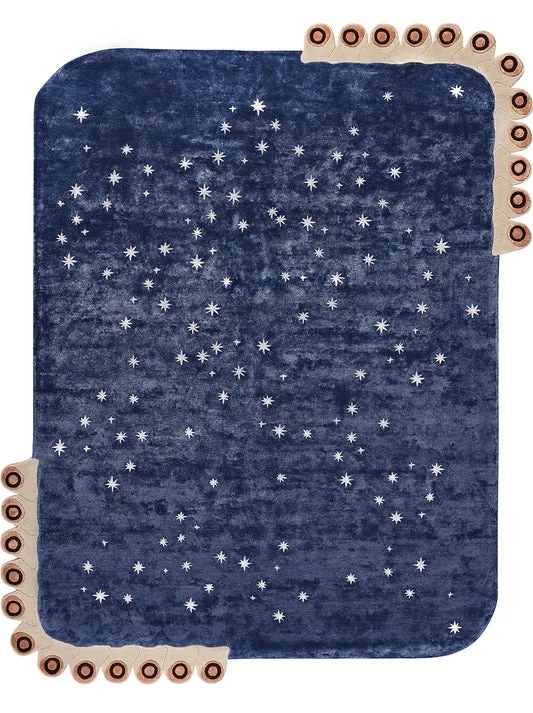
A postcard is rarely about the view alone. What survives is more elusive: a colour remembered years later, the geometry of a façade, a rhythm from the street, the feeling of belonging somewhere for a moment.
That is the territory explored by Postcards, a collaboration between Hands and Doodle And The Gang. Hands presents the collection as a journey across Cairo, Dubai, Beirut, Riyadh and Varanasi, shaped by travel, reflection and memories of place. Rather than reproducing those places literally, the designs distil fragments of travel and culture into contemporary carpets shaped by memory and everyday ritual.
The collection is inspired by the travels of sisters Asmaa and Mentalla Said, whose journeys supply the emotional map behind the work. Architecture, pattern, colour and fleeting observations become starting points rather than endpoints. The result is less travelogue than recollection: place softened by time, then reconstructed through craft.
The collection makes most sense when seen as a process of translation. A remembered detail becomes a drawing; a drawing becomes pattern; pattern gains weight, pile and texture in the hands of the artisans who make the carpets in India. The film below places that exchange between design and making at the centre of the story.
Postcards by Hands × Doodle And The Gang — the collection film.
Memory is not treated as something to reproduce faithfully. It becomes raw material: edited, abstracted and given a new physical life.
Across the nine designs, the visual language shifts dramatically. Some are tightly ordered and architectural; others loosen into stars, dots, scallops, stripes and irregular silhouettes. What connects them is not a single motif, but a shared willingness to let cultural references become personal rather than documentary.
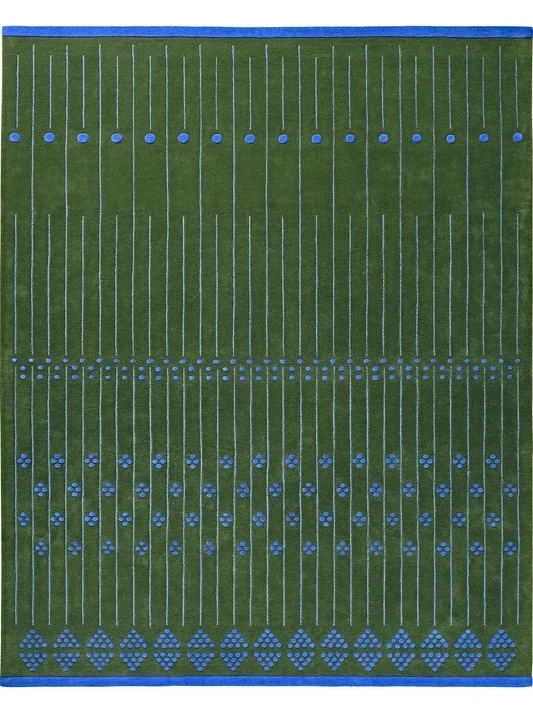
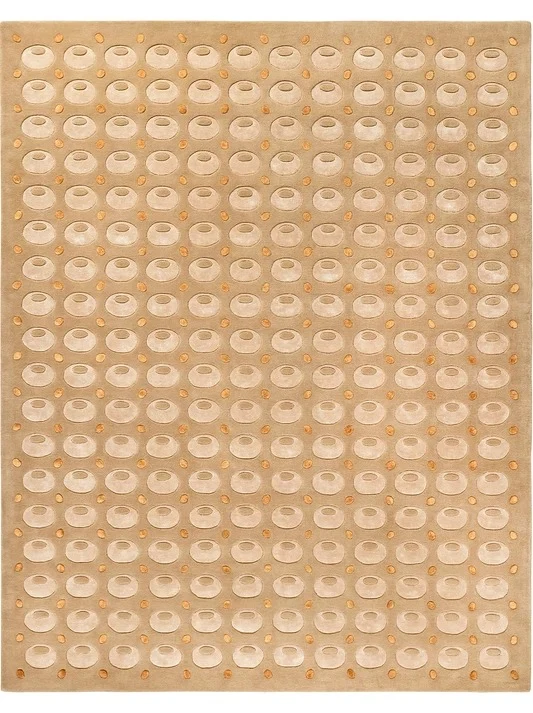
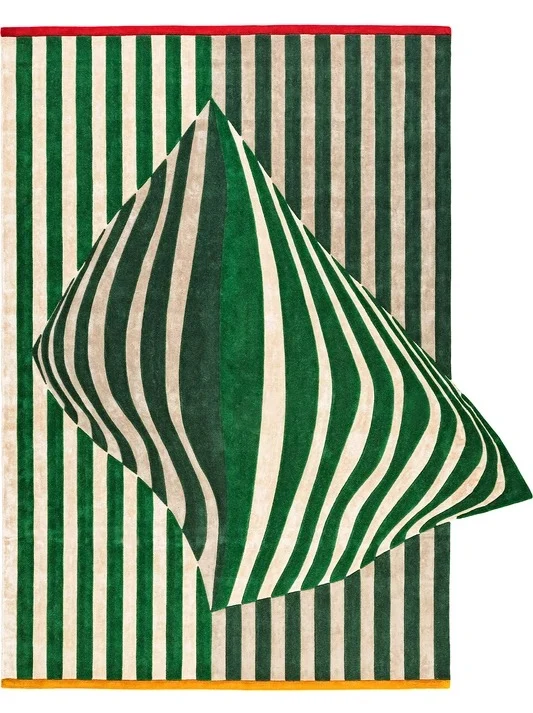
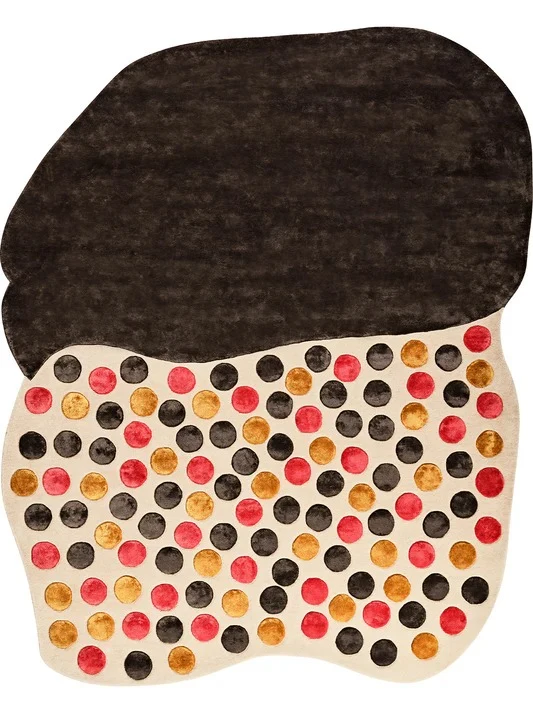
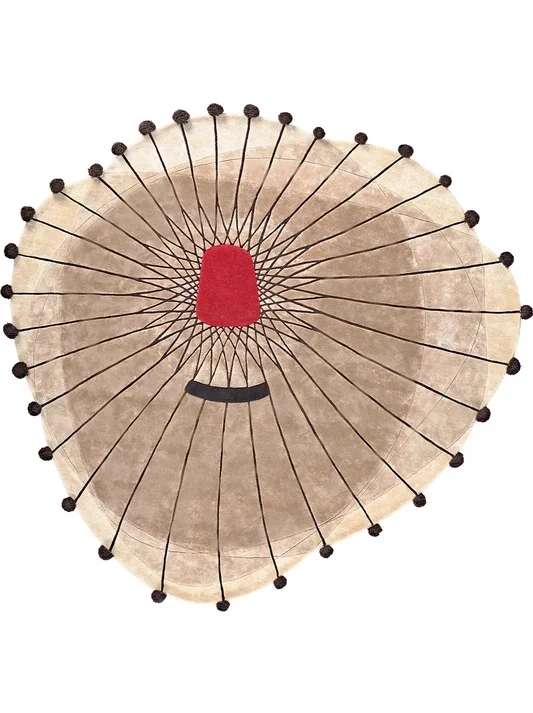
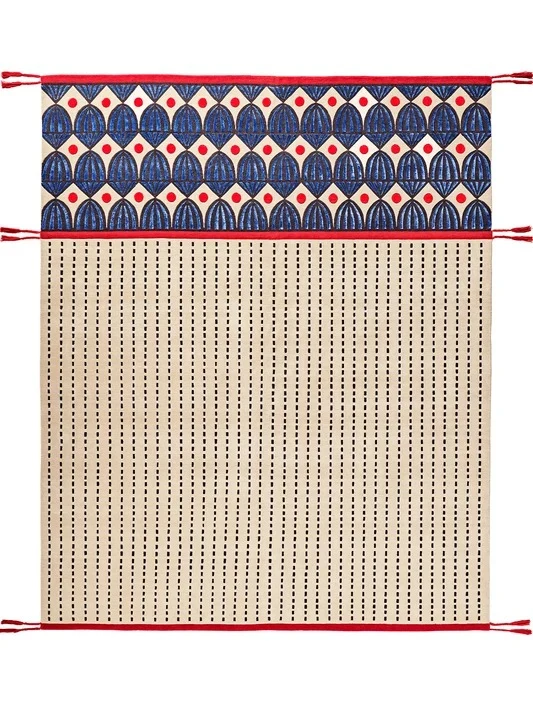
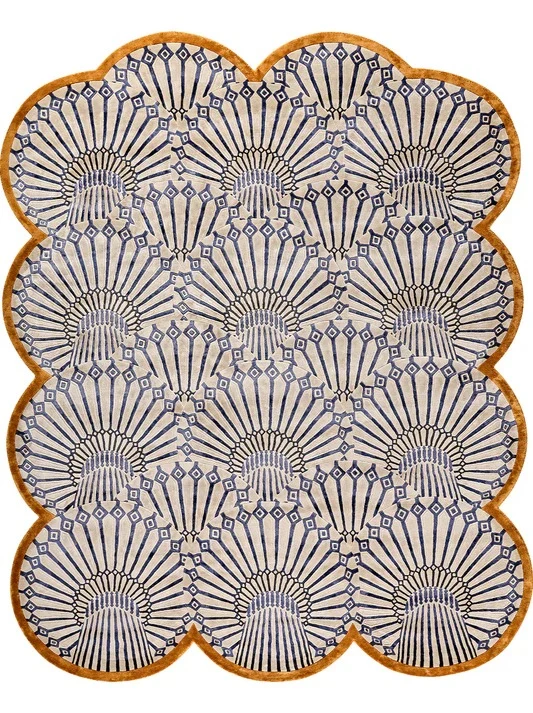
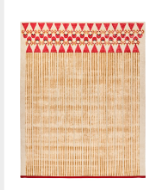
What gives Postcards its character is the distance it keeps from obvious representation. The collection treats its references as abstract compositions rather than literal city portraits, distilling memories of place into form, colour and texture. That distinction matters. It allows a city to be present without becoming illustration, and a personal memory to remain open enough for someone else to find their own association within it.
There is also a productive tension between the spontaneity of a remembered fragment and the discipline required to turn it into a handmade carpet. A loose gesture has to become repeatable; an irregular edge has to be constructed; a field of dots, lines or stars has to acquire scale and tactility. In that conversion, the designs stop behaving like images and begin behaving like objects in a room.
Hands has been making handmade carpets since 1881, while Postcards deliberately looks outward to contemporary lives lived across cities and cultures. The collaboration works because those two timelines do not compete. The old craft becomes a means of preserving something decidedly modern: the fragmented, mobile way in which many people now build a sense of home from more than one place.
That may be the collection’s most resonant idea. A postcard traditionally carries a place away from itself. Postcards does something similar, only more permanent. Cairo, Dubai, Beirut, Riyadh and Varanasi are not reduced to landmarks. They linger instead as traces: a pattern, a colour, a rhythm, a shape, transformed into something that can live in another home entirely.